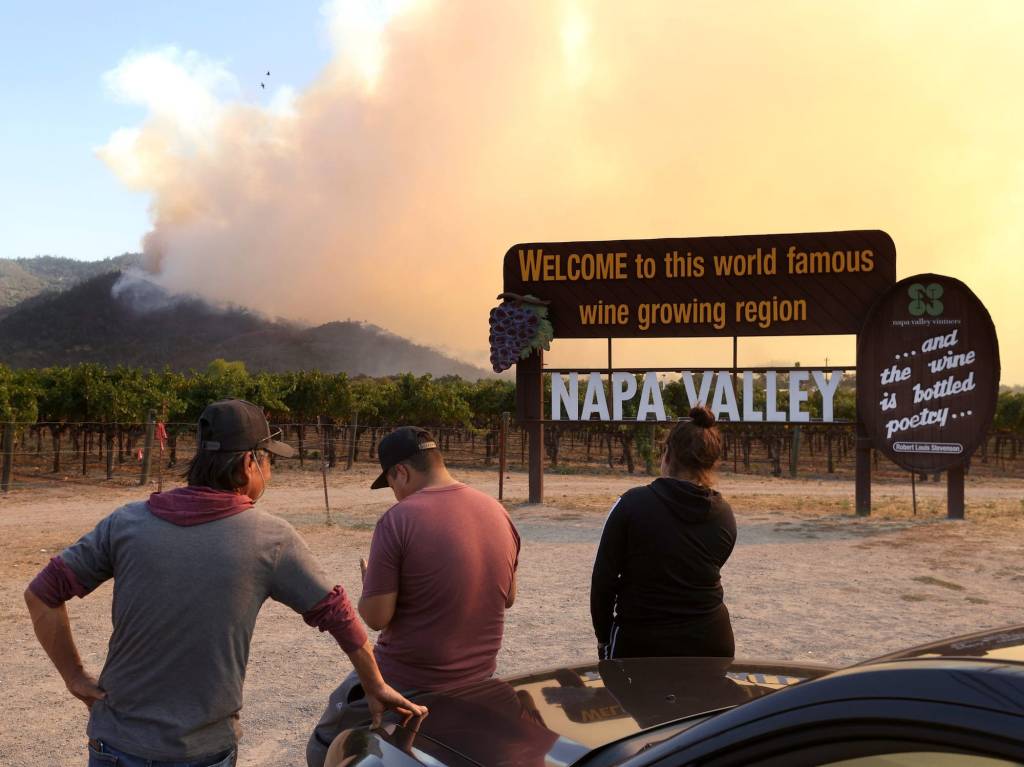
Over the last few months, I have gotten multiple questions about the fires in Napa last Fall. “Are the wineries OK?”, “What does smoke do?”, “Can we drink the 2020 vintage?” and so on…. Initially I wanted to write this blog entry around Thanksgiving but something kept telling me to wait. I’m glad I did and here is why: my answer to the question then is different than my answer today.

There are different ways fire can affect a winery and its production. The first is if the actual winery burns. If your building burns down then you are done for. This past fall 30 wineries burned down. (if you remember, there were also fires in 2017, but only a few wineries were totally destroyed). Starting production again is hard. Do you wait to rebuild? Do you borrow/lease space elsewhere? How does that change your operations? What is the insurance reimbursement time frame?
Another major way is if your vineyards burn. If you don’t have any grapes then you can’t make any wine. Or at least, you can’t make the same wine you have been making. There are ways to get access to other grapes, but your wine won’t be the same.

The third is smoke on the grapes. Think about the last time you spent time around a fire. (fire pit, bonfire, etc…) Even a few minutes by the fire can make your clothes smell like smoke. At least you and I can wash our clothes. You can’t wash the smoke off of grapes. Knowing how much smoke got onto the grapes and how that changes the final wine is very hard to predict. You can run tests, but those take a while. And in a scenario like last fall, everyone in the valley is trying to do the same tests at the same time from only two laboratories.
My original response to the myriad of fire questions was something like this: “If the winery or vineyards burned then it’s bad, but otherwise it should be mostly fine. A good winery will make a quality wine because they have a reputation to protect.” That sounded like a good answer and it served me well for a while. However, a few things made me change my position. 1) There were a lot of fires that covered a lot of area and I saw a map of them (see map below), 2) Vineyards that I have walked in burned, and 3) I did a smoke taste test.

Recently I got together with some of my wine-industry peers and we tasted several 2017 Napa cabernets from wineries that said their wines were smoke-free. In some you could actually taste the smoke. In others the flavors were muted. And in a few more, the wines just tasted ‘off’ and didn’t taste like they usually do or should. This is bad because a lot of people drank these wines thinking this is how that wine should taste.
So here is my new answer: “We don’t really know what the smoke will do until it is too late.” That’s why we are seeing significantly more wineries come out in advance and say they will not make a wine from the 2020 vintage. This is huge decision to make, but it is the right one. There are major ramifications to that decision. The obvious one is financial. Also, they have to figure out how to bridge the gap so we don’t run out of stock at the winery and at your favorite restaurant or store.
This isn’t to say that there won’t be great wines coming out of the valley from the 2020 vintage. There absolutely will! Napa Valley covers almost 800 square miles and only a relatively small portion was affected by the fire/smoke. There are also many different grapes being grown that ripen at different times. Merlot, Chardonnay, and Sauvignon Blanc are all ready to pick before Cabernet and were harvested before the fires. Plus, many wineries have multiple vineyards around the valley. Ripening times and different vineyards allow the artisan winemakers to modify the blends each year to come up with the best wine possible.
 Always the Wine Guy